
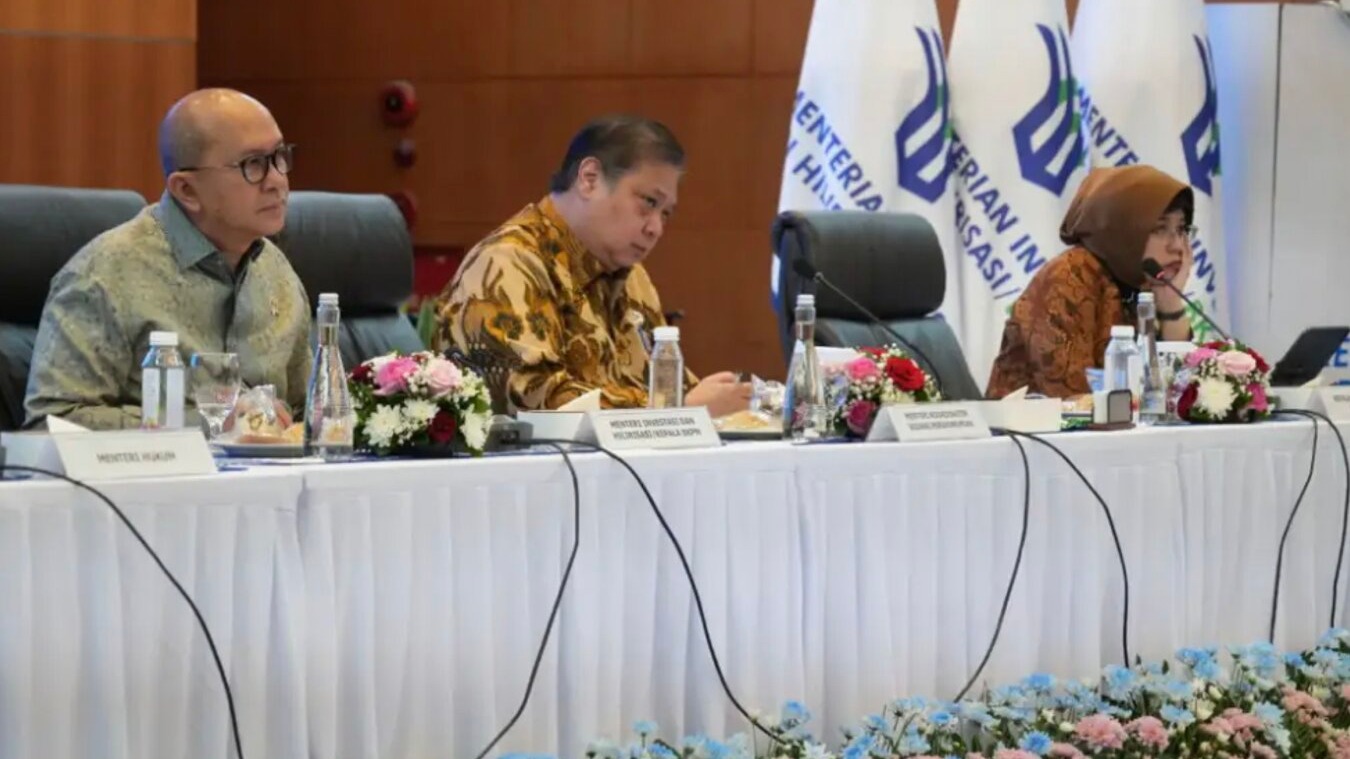
Q1 2026 Investment Realization Shows Positive Momentum
Jakarta, April 23, 2026 – During the first quarter of 2026, the global economy faced uncertainty due to escalating geopolitical tensions, particularly in the Middle East. Conflicts involving the United States, Israel, and Iran have weighed on global economic prospects.
Amid these global challenges, Indonesia’s investment performance remained resilient, reflecting sustained confidence from both domestic and foreign investors. The Ministry of Investment and Downstream Industry (MIDI)/Investment Coordinating Board of the Republic of Indonesia (BKPM) reported that Q1 2026 investment realization reached Rp 498.8 trillion (approximately US$ 30 billion), marking a 7.2 percent year-on-year (YoY) increase. This amount represents 24.4 percent of the 2026 full-year investment target of Rp 2,041.3 trillion.
“Investment growth of 7.2 percent in the first quarter shows that investor interest, both domestic and foreign, remains strong amid global dynamics,” said Investment Minister and BKPM Chairman Rosan Perkasa Roeslani in Jakarta. He also emphasized that investment continues to be a key driver of national economic growth.
Employment and Investment Structure
The Q1 investment contributed directly to the real economy, creating 706,569 new jobs, an 18.9 percent increase compared to the same period in 2025.
From a structural standpoint, Foreign Direct Investment (FDI) accounted for Rp 250 trillion (50.1 percent), while Domestic Direct Investment (DDI) reached Rp 248.8 trillion (49.9 percent). This nearly equal distribution reflects strong global investor confidence and a competitive domestic business environment.
Regional Investment Distribution
Investment flows were well-distributed geographically. Projects outside Java contributed Rp 251.3 trillion (50.4 percent), slightly higher than Java-based projects at Rp 247.5 trillion (49.6 percent).
“The dominance of investment outside Java indicates that economic development is becoming more inclusive. This aligns with downstreaming policies that encourage investment across multiple regions,” said Minister Roeslani.
Sectoral Performance
Investment continued to focus on manufacturing and downstreaming, with basic metals and metal products leading at Rp 69.4 trillion. Other key sectors included:
- Data centers and other services: Rp 64.2 trillion
- Mining: Rp 51.9 trillion
- Housing and industrial estates: Rp 48.3 trillion
- Transportation, warehousing, and telecommunications: Rp 45.4 trillion
Total downstreaming investment reached Rp 147.5 trillion, nearly 30 percent of Q1 investment, highlighting the government’s strategy to promote value-added processing of raw materials, which strengthens economic resilience and reduces vulnerability to global commodity fluctuations.
Foreign Investment by Country
Q1 2026 FDI was led by Singapore (US$ 4.6 billion), followed by Hong Kong (US$ 2.7 billion), China (US$ 2.2 billion), the United States (US$ 1.3 billion), and Japan (US$ 1.0 billion).
Notably, Australia and New Zealand also played an active role:
- Australia ranked #10, investing US$ 200.4 million across 5,207 projects
- New Zealand ranked #31, investing US$ 14.5 million across 542 projects
These figures highlight the growing contributions of Australia and New Zealand to Indonesia’s investment ecosystem, particularly in downstreaming, infrastructure, and services.
Further details on investment realization can be accessed through the following link: https://www.bkpm.go.id/id/info/realisasi-investasi/2026